
Gurgling behind the dashboard when you start the car?
A gurgling or sloshing sound behind the dashboard, most often in the first seconds after you start the car, is usually coolant and air moving through the heater core, which sits behind the dash. Air gets in when the coolant runs low, often from a slow leak, or when a recent coolant service was not bled properly. On its own it is not an emergency, but low coolant can make the engine overheat. Here is how to tell what is behind it, when to stop driving, and what the fix costs.
Safety first
Can I still drive?
- Drive it, and book a check
A short gurgle for a few seconds after you start, the temperature gauge sits where it always does, the heater gets warm, there is no puddle, and the coolant level, read with the engine cold, is between MIN and MAX. You can drive it to a shop in the next few days; watch the gauge on the way.
- Get it checked this week, short trips only
The level sits close to MIN, the heater blows lukewarm while the engine is warm, the gauge swings up and down, or the gurgle started right after a coolant service. Top up with the engine cold if it is low, keep trips short and have the system checked for a leak and bled of air.
- Stop driving
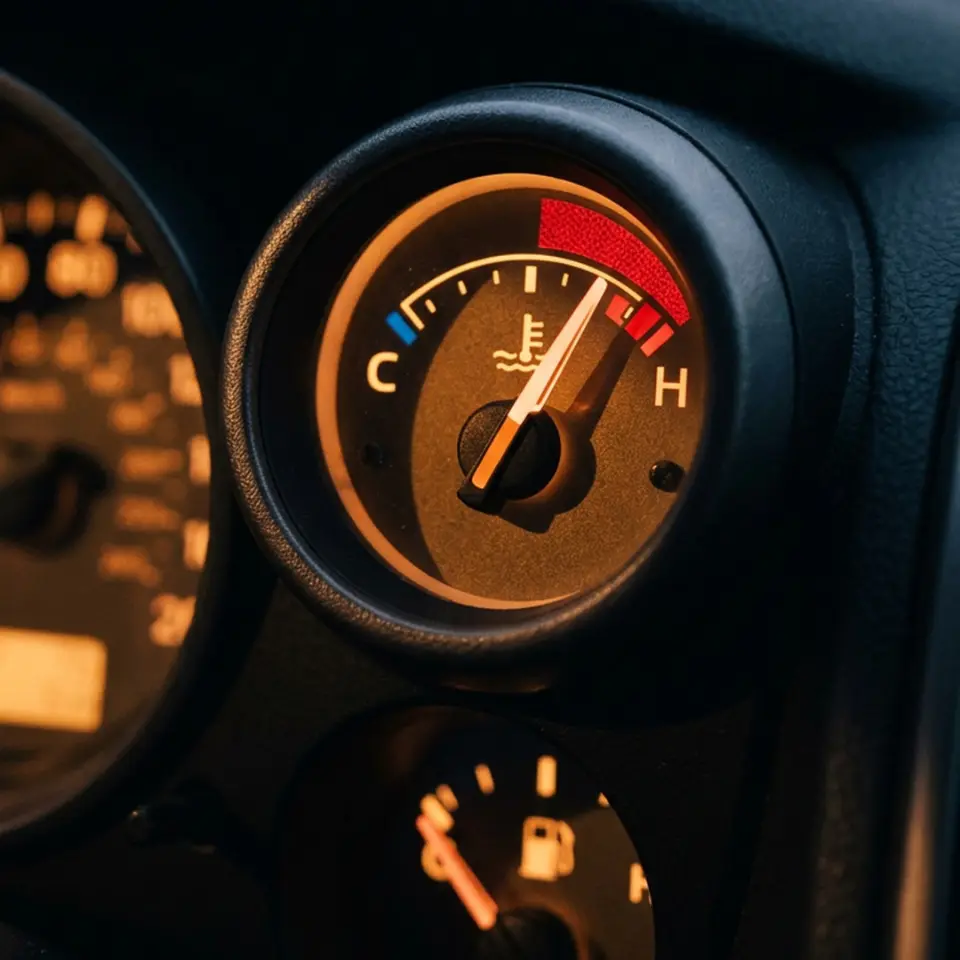
The temperature gauge climbs toward hot or a coolant warning light comes on, steam comes from under the hood, the level is below MIN or drops again soon after a top up, there is a puddle under the car, the inside of the windshield fogs up with a sweet smell, or white exhaust does not clear once the engine is warm. Pull over where it is safe, turn the engine off and leave the caps closed while it is hot. Have it towed instead of driving on.
Narrow it down
When do you hear it?
| When you hear it | What it usually points to |
|---|---|
| A gurgle or slosh behind the dash, often on the passenger side, in the first seconds after you start | Coolant and air moving through the heater core behind the dashboard. Air usually gets in when the coolant is low. |
| It started after a coolant change, a flush or a repair to the cooling system | Air left in the system because it was not bled out properly. A shop can bleed it. |
| The heater blows cool air although the engine is warm, or the temperature gauge swings up and down | Low coolant or an air pocket that blocks the flow through the heater core. |
| The coolant level is low again a few days after you topped it up | A leak that lets coolant out and air in: a hose, the radiator, the water pump or a loose or faulty cap. |
| A slosh only after the A/C has been running, a damp floor on the passenger side, and no coolant missing | Water from a clogged A/C drain, not coolant. A nuisance, not a cooling problem. |
| A sweet smell inside, fog on the inside of the windshield, or a damp carpet under the dash | A leaking heater core. Stop driving and have it checked. |
| Bubbles keep rising in the reservoir with the engine running, plus white exhaust or a climbing gauge | Overheating, or less often a head gasket leak. Stop driving. |
Listen
What it sounds like
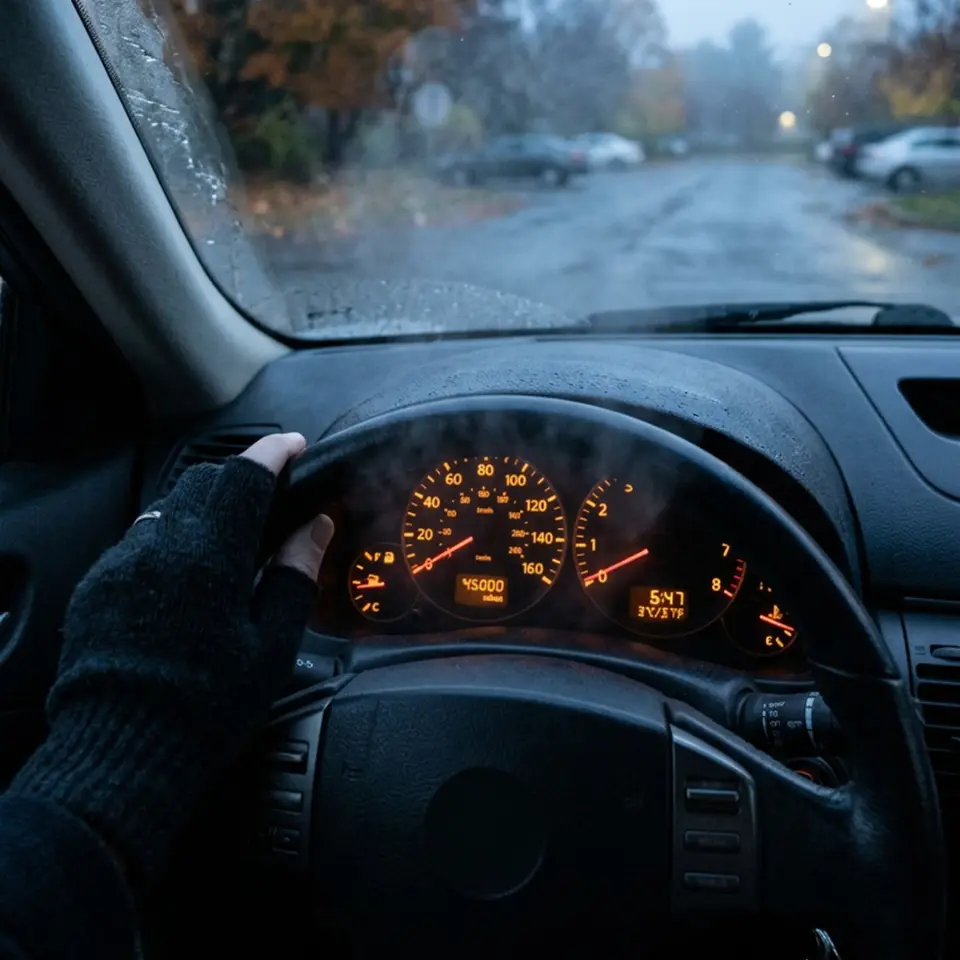
It sounds like water trickling or gurgling through a pipe behind the dashboard, often on the passenger side behind the glovebox. It is most noticeable in the first seconds after you start the engine, when the water pump pushes coolant into the heater core.
A slosh you only hear after the A/C has been running, often with a damp floor on the passenger side, is usually water trapped by a clogged A/C drain, not coolant.
Check it yourself
What you can check yourself
Do
Parked on level ground, engine off and cold, ideally before the first start of the day:
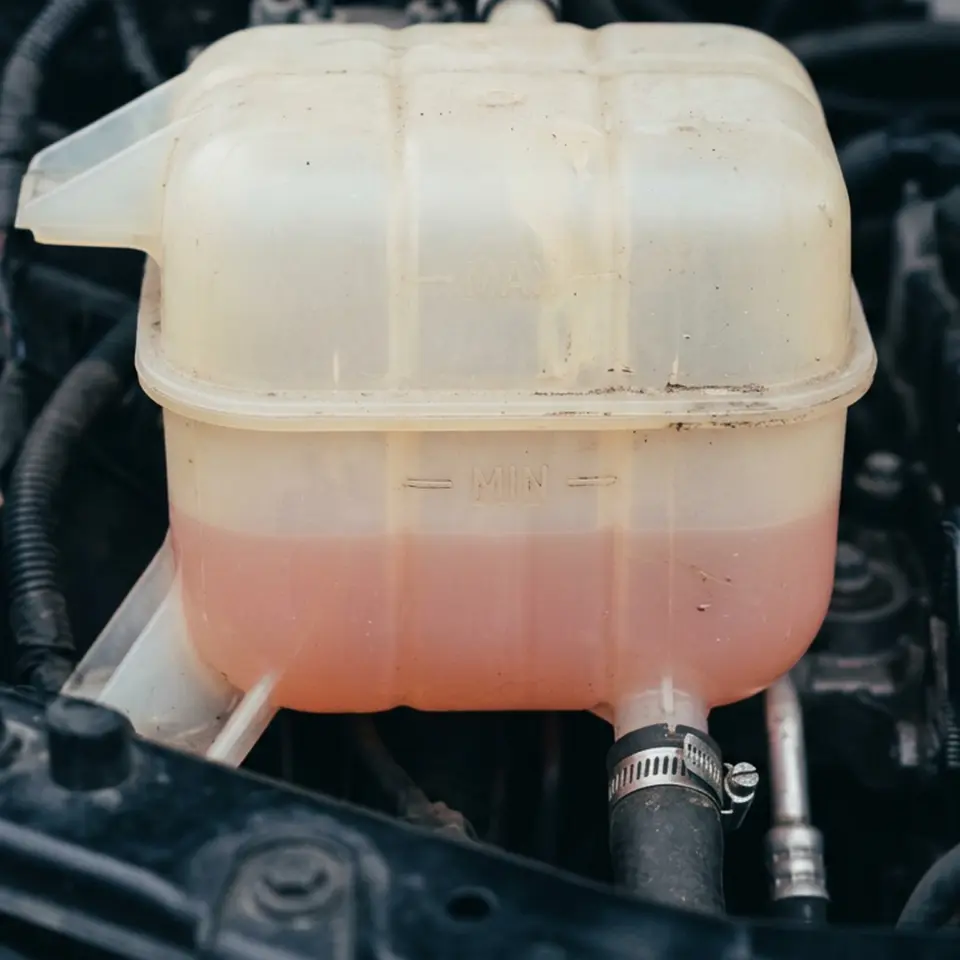
- Read the coolant level. Find the see-through reservoir and check the level against the MIN and MAX marks. Just look; you do not need to open it.
- Look under the car. Fresh drips or a puddle of a brightly colored fluid, such as green or orange, where you park point to a coolant leak.
- Check inside the car. A sweet smell, fog on the inside of the windshield or a damp carpet on the passenger side point to the heater core.
- Watch the gauge and the heat on the next drive. The needle should settle where it always does and the heater should blow warm once the engine is warm.
Please don't
Three things that make it worse:
- Open the cap on a warm engine. The system is under pressure, and hot coolant can spray out and burn you. Wait until the engine has cooled down completely.
- Keep driving with the gauge climbing. Low coolant can overheat an engine within minutes, and sustained overheating often ends in a blown head gasket.
- Top up again and again. If the level keeps dropping, adding coolant only hides a leak. Have the system checked instead.
If the level is low and the engine is cold, topping up with the coolant type named in the owner's manual is fine; never mix types. A shop can find a hidden leak with a pressure test.
Costs
What the repair usually costs
US averages, 2026. Prices vary a lot by car and region.
| Repair | Part | At a shop, part and labor |
|---|---|---|
| Coolant service: drain, refill and bleed out the air | about $50 to $300 | about $200 to $500 |
| New radiator hose | about $100 to $375 | about $200 to $650 |
Prices depend on the coolant your car takes, and some cars need special tools to bleed the air out. A leaking heater core is the expensive case: it sits behind the dashboard, the labor costs more than the part, and it is a job for a shop.
Record it
How to record it
The gurgle happens with the car parked, so there is no need to drive for a recording.
- Record the first start of the day.Parked outdoors, in park with the parking brake on. Start recording before you turn the key.
- Hold the phone near the glovebox.Radio off and the fan on low. The sound comes from behind the dash, often on the passenger side.
- Fifteen seconds is enough.Keep recording through the start and a few seconds after. Say out loud when you turn the heater on.
- Photograph the reservoir with the engine cold.Get the coolant level and the MIN and MAX marks in the picture, cap closed.
Get the likely cause for your car
Car Whisperer is an AI mechanic on your iPhone. Add your car, record the first start of the day from inside and add a photo of the coolant reservoir taken with the engine cold. In seconds you get the likely cause, how urgent it is, what to check, and what the fix should cost for your car.

It doesn't plug into your car and it can't measure your coolant level, pressure test the cooling system or read the engine temperature. A shop finds a leak with a pressure test. Car Whisperer tells you what is likely, what to check and what to ask.
FAQ
Questions
Why does my car gurgle behind the dashboard when I start it?
Usually it is coolant and air moving through the heater core, which sits behind the dash. Air gets in when the coolant is low, often from a slow leak, or when a recent coolant service was not bled properly. Check the level with the engine cold.
Is it safe to drive with air in the cooling system?
For short trips, if the level is between MIN and MAX and the temperature gauge stays where it usually sits. Air and low coolant can make the engine overheat, so have it checked soon. A climbing gauge, steam, a level below MIN or a sweet smell inside mean stop driving.
How do you get air out of a cooling system?
It is bled out: the system is filled with the engine cold, then the engine runs until the trapped air escapes, on some cars through bleeder screws. Some cars need special tools and hot coolant burns, so if you are not sure, let a shop do it.
Why does it sound like water sloshing in my dashboard after using the AC?
That is usually water, not coolant. The A/C makes condensation that drains out under the car; if the drain clogs, water collects behind the dash and sloshes. A damp passenger floor is the giveaway, and clearing the drain fixes it.
Keep reading